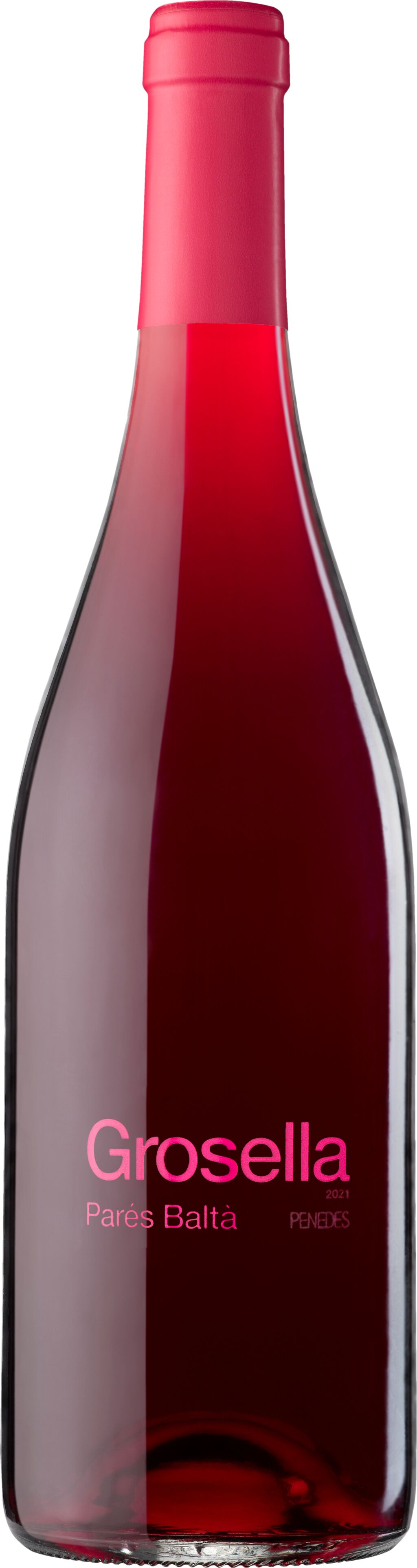
Parés Baltà Grosella
24,75 €(19,72 € ALV 0%)
Parés Baltà
Viettelevän marjaisa
- In stock
REGISTER TO ORDER
Direct sales customers with a liquor license can place orders through our online store. Placing orders requires registration.
My account- Spain
- DO Penedès
- Sumoll 100%
- Light
- Low tannin
Viini on omiaan sellaisenaan nautittavaksi hyvän seuran kera, mutta toimii myös herkullisesti tapasten kanssa!
Results of Norex's sustainability survey: Parés Baltà
 Environmental
 Social
 Governance
The chart shows the indicative results of Norex's own sustainability survey of producers. Read more. See how the survey is scored.
Description
Sumoll-rypäle tuo esiin raikkaimman luonteensa: intensiiviset aromit ja kirkas väri, joissa on punaherukan vivahteita. Perinteinen valmistusmenetelmä ruostumattomassa terästankissa. Kahden viikon maserointi ja erittäin hellävarainen pumppaus 23 °C lämpötilassa, jotta saadaan esiin Sumoll-rypäleen kuorten hedelmäisyyden maksimaalinen maku. Suurempi kuoripinta-ala tuo enemmän hedelmäisiä aromeja ja rypäleelle ominaisen punaherukan värin.
Additional information
| Area Classification | DO Penedès |
|---|---|
| Grape varieties | Sumoll 100% |
| Producer | Parés Baltà |
| Vintage | 2021 |
| Alcohol | 12 % |
| Country | Spain |
| Fullness | Light |
| Tannins | Low tannin |
| Shutter Type | Natural cork |
| Package size | 75 cl |
| Packaging Type | Glass |
| Bottles per case | 6 |
| Pledge Information | No deposit |
| Norex product number | 173147 |
Parés Baltà
Parés Baltà winery was established back in 1790 and remains a family-owned business to this day. Their wine production is infused with great passion, and the endearing and warm-hearted Cusiné family welcomes all wine enthusiasts to their estate, located just Read moreThe producer's responsibility focus areas
1. Agriculture: biodynamic farming, increasing biodiversity, and placing new vineyards at higher altitudes where a cooler microclimate balances rising temperatures. Additionally, using more local, drought-resistant grape varieties, reducing irrigation to save groundwater, and utilizing forests as carbon sinks.
2. Packaging: lighter bottles to reduce the carbon footprint, using more sustainable capsules and recycled materials.
3. Facilities & logistics: LED lighting and more efficient motors reduce power consumption and increase energy efficiency. Electric and hybrid cars are also in use.