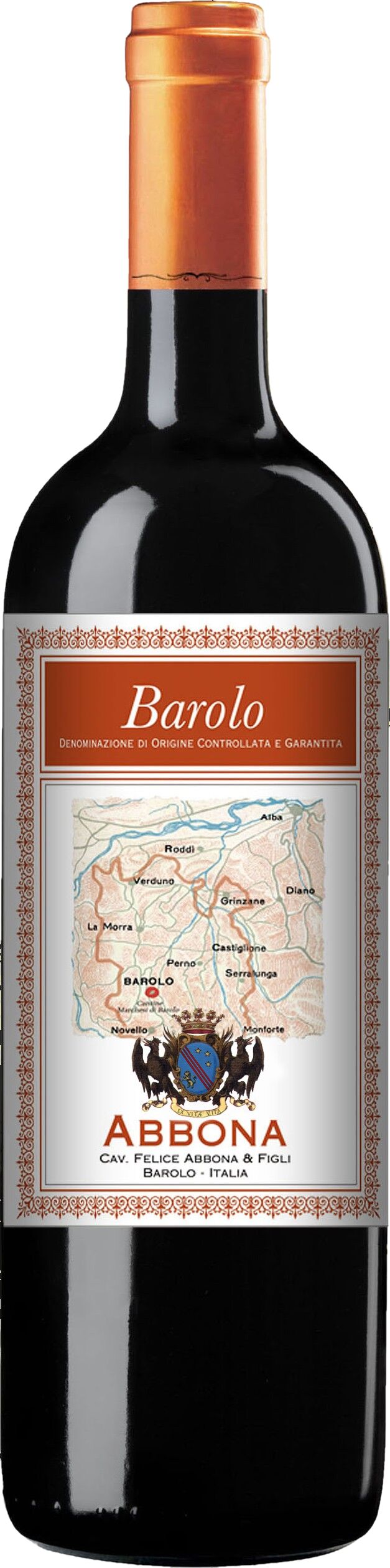
Barolo Abbona
40,99 €(32,66 € ALV 0%)
Marchesi di Barolo
Viinien kuningas ja kuninkaitten viini!
- In stock
REGISTER TO ORDER
Direct sales customers with a liquor license can place orders through our online store. Placing orders requires registration.
My account- Italy
- DOCG Barolo
- Nebbiolo
- Full-bodied
- Tannic
Ihana pari tryffelipastalle, ravioleille, lihapadoille ja riistalle.
Norex Responsibility Meter: Marchesi di Barolo
 Environmental
 Social
 Governance
The responsibility meter is an indicative description of the producer's level of responsibility and is based on Norex's own responsibility survey. Read more on our information pages.
Additional information
| Area Classification | DOCG Barolo |
|---|---|
| Grape varieties | Nebbiolo |
| Producer | Marchesi di Barolo |
| Vintage | 2020 |
| Alcohol | 14 % |
| Country | Italy |
| Fullness | Full-bodied |
| Tannins | Tannic |
| Shutter Type | Natural cork |
| Package size | 75 cl |
| Packaging Type | Glass |
| Bottles per case | 6 |
| Pledge Information | No deposit |
| Norex product number | 185013 |
Marchesi di Barolo
The aristocratic tale of Marchesi di Barolo begins two centuries ago in the heart of the town of Barolo. Marquis Carlo Falletti, alongside his French noblewoman wife, began producing wine on the estate. Generations later, in 1929, Pietro Abbona acquired Read moreThe producer's responsibility focus areas
1. Vineyard management through the S.Q.N.P.I. sustainability approach, such as implementing
natural techniques for pest control and sowing cover crops. 2. Use of precision farming equipment and weather stations to monitor climate, microclimate, vine disease development, and pest presence to develop prevention methods. This approach allows us to reduce water use and other products needed for cultivation. 3. The winemaking process and material selection aimed to reduce waste and energy consumption, for example, implementing tangential filters to minimize filtration waste and temperature-controlled barrels to reduce energy used by the general cooling system.